I recently picked up the Xiaomi Redmi Pad 2 Pro — a 12.1-inch Android tablet — and I want to share why I chose it and what I think after using it for a while.
Table of Contents
Why I Chose the Redmi Pad 2 Pro
After getting the iPhone 17, my old Galaxy Tab A9 LTE gradually became a dedicated video-watching device. The problem? Its 8-inch screen started feeling cramped for media consumption, so I began looking for something bigger.
The 12-inch tablet market is surprisingly narrow
Narrowing my search to the 12-inch range, I found the options pretty limited — essentially a handful of Lenovo tablets and the Redmi Pad 2 Pro. (Higher-priced options like the iPad Pro exist, of course, but they’re overkill for what I needed.)
Why I skipped Lenovo’s Xiaoxin Pad lineup
In Korea, Lenovo’s Xiaoxin Pad series (especially the 12.1 and Pro 12.7) is massively popular for budget-conscious buyers. But I had a bad experience with the Xiaoxin Pad 2022 — it’s a Chinese domestic model that requires manually flashing a global ROM, and you have to repeat that process every time a firmware update drops. On top of that, the Chinese domestic version stores your data on servers in China, which was a deal-breaker for me.
Lenovo IdeaPad vs. Redmi Pad 2 Pro
That left me comparing Lenovo’s globally-available IdeaPad Plus and IdeaPad Pro against the Redmi Pad 2 Pro. The IdeaPad Pro has the best specs but crosses the $300 mark, so I ruled it out for what’s essentially a media tablet. Between the IdeaPad Plus and the Redmi Pad 2 Pro, one thing tipped the scale decisively: software support.
The real reason: 7 years of software updates
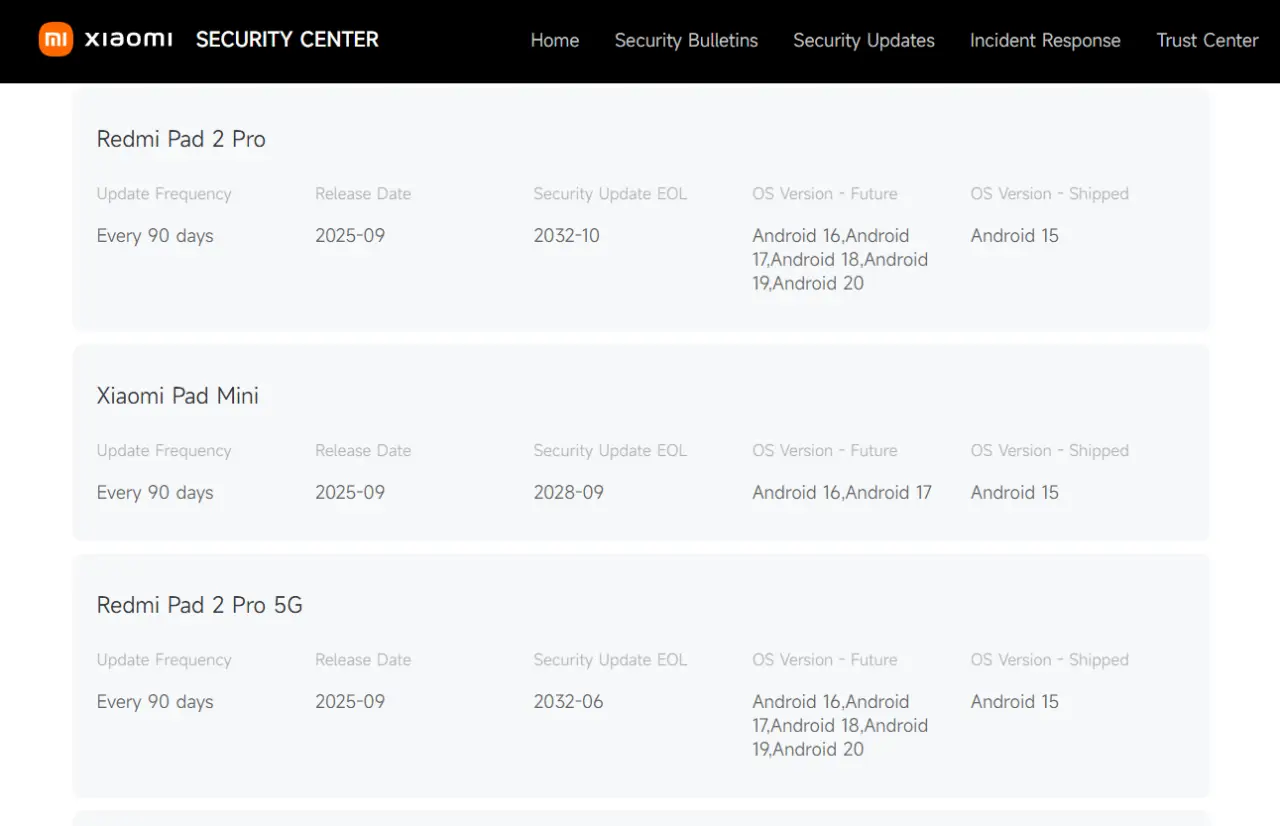
Xiaomi’s official website lists the Redmi Pad 2 Pro’s update policy as follows:
- 5 major OS upgrades
- 7 years of security updates (through October 2032)
- Quarterly update cycle
I was genuinely surprised. Samsung’s multi-year update pledge has clearly pushed the Android ecosystem in a positive direction — and apparently European market pressure on Xiaomi (where update longevity is a hot-button issue) played a role too.
By comparison, Lenovo’s Korean-market IdeaPad Plus and Pro are listed with support only through 2029. A three-year gap is significant when you’re planning to use a device long-term.
Unboxing the Redmi Pad 2 Pro
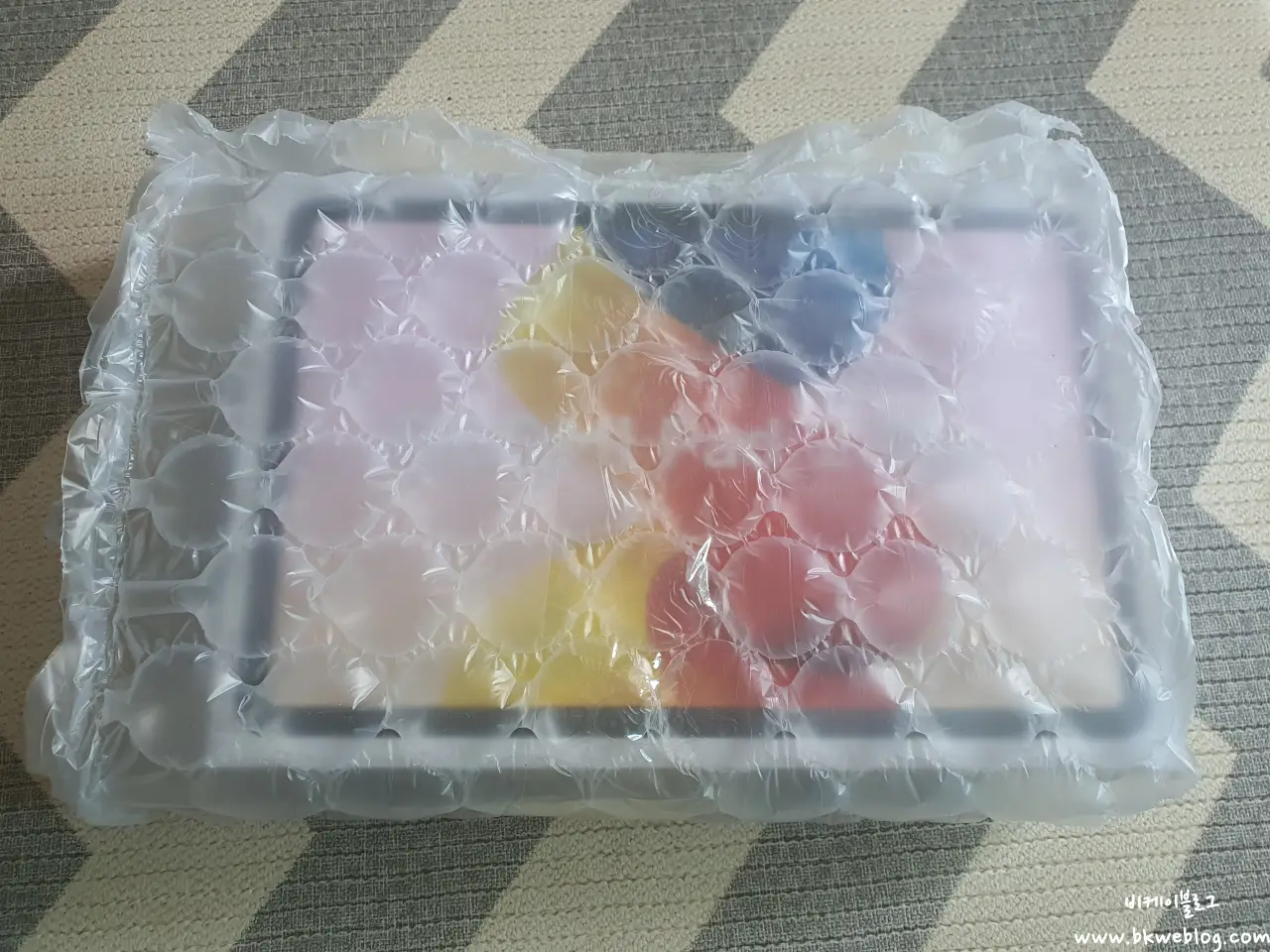
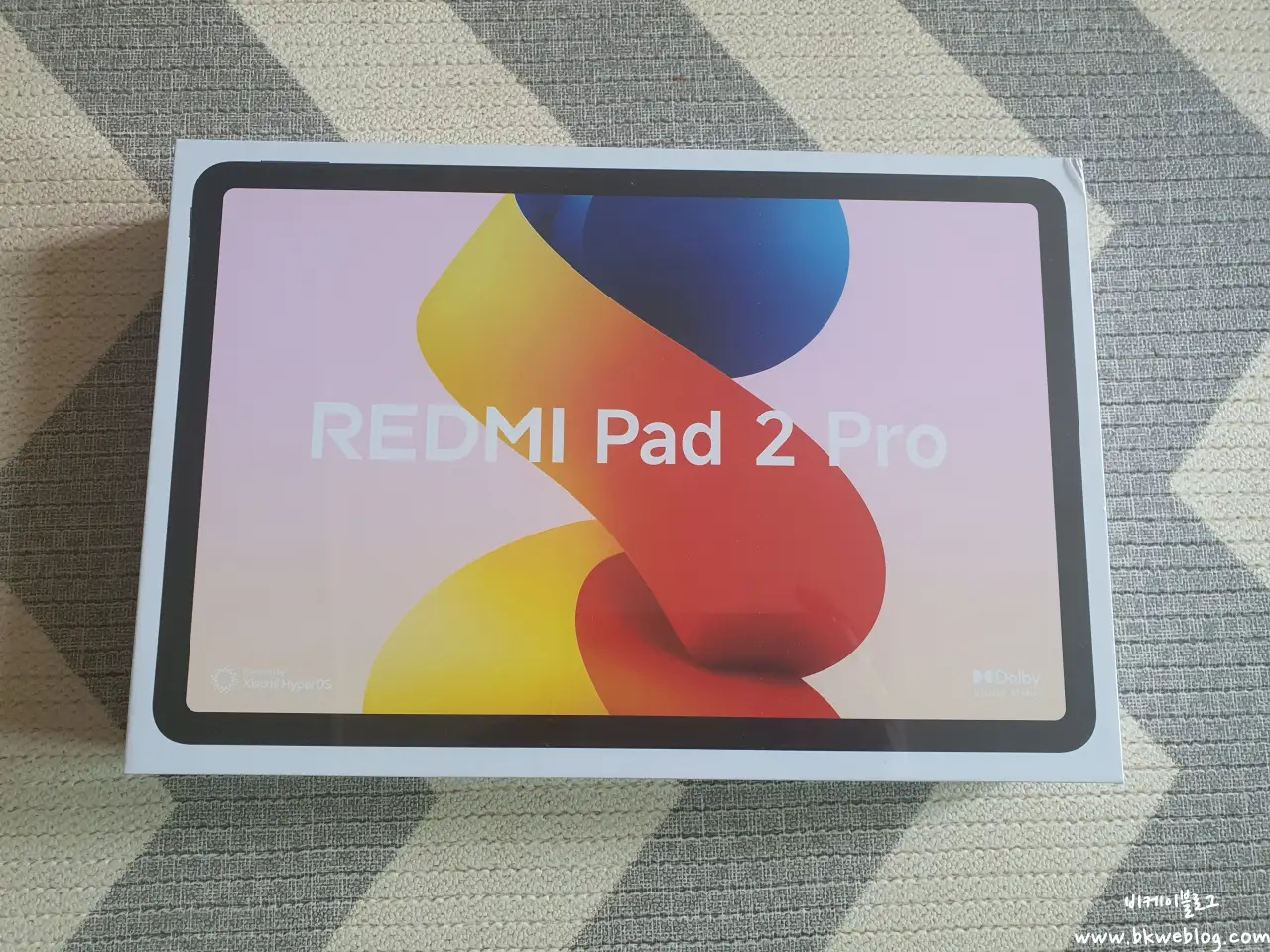
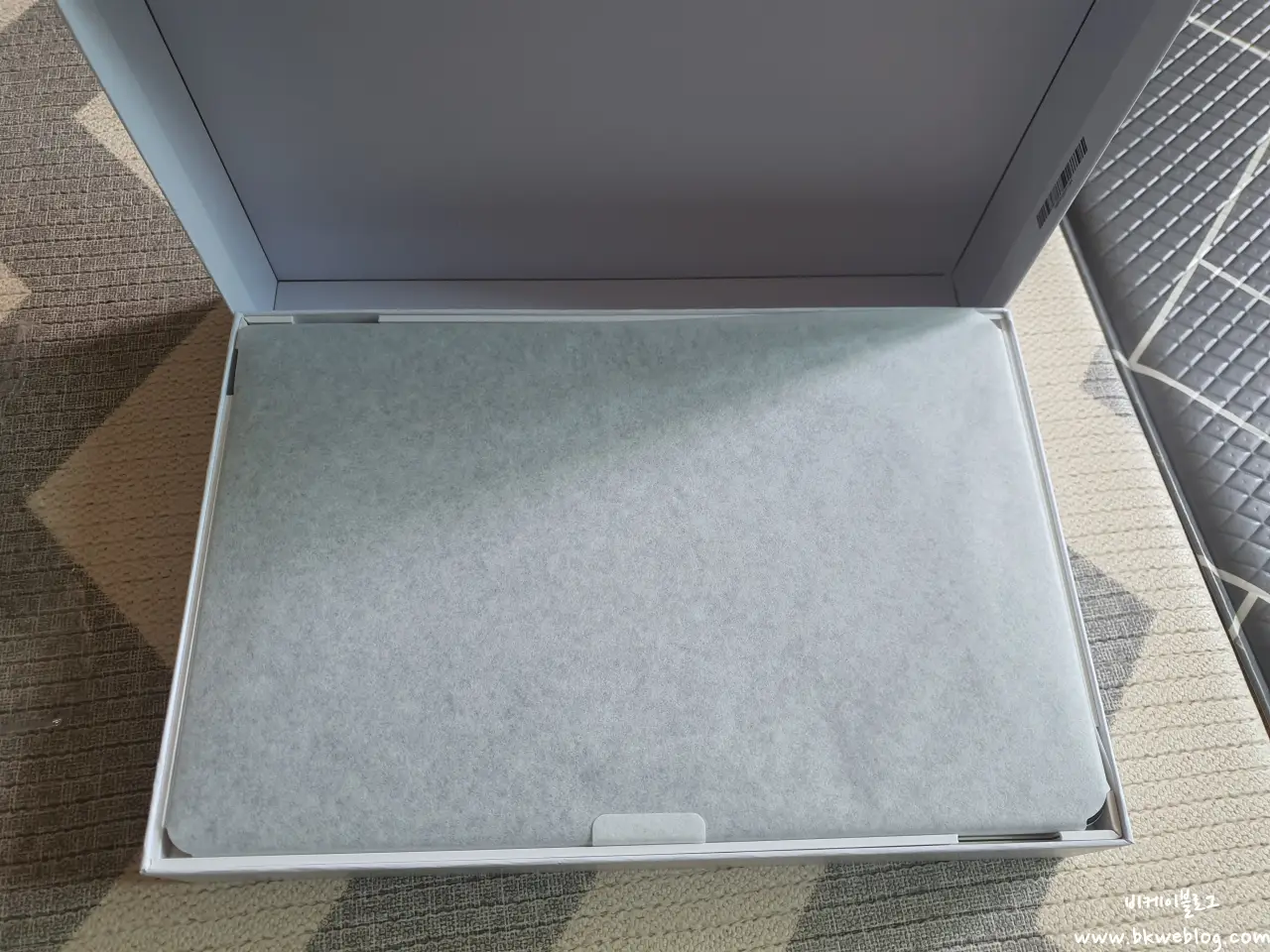
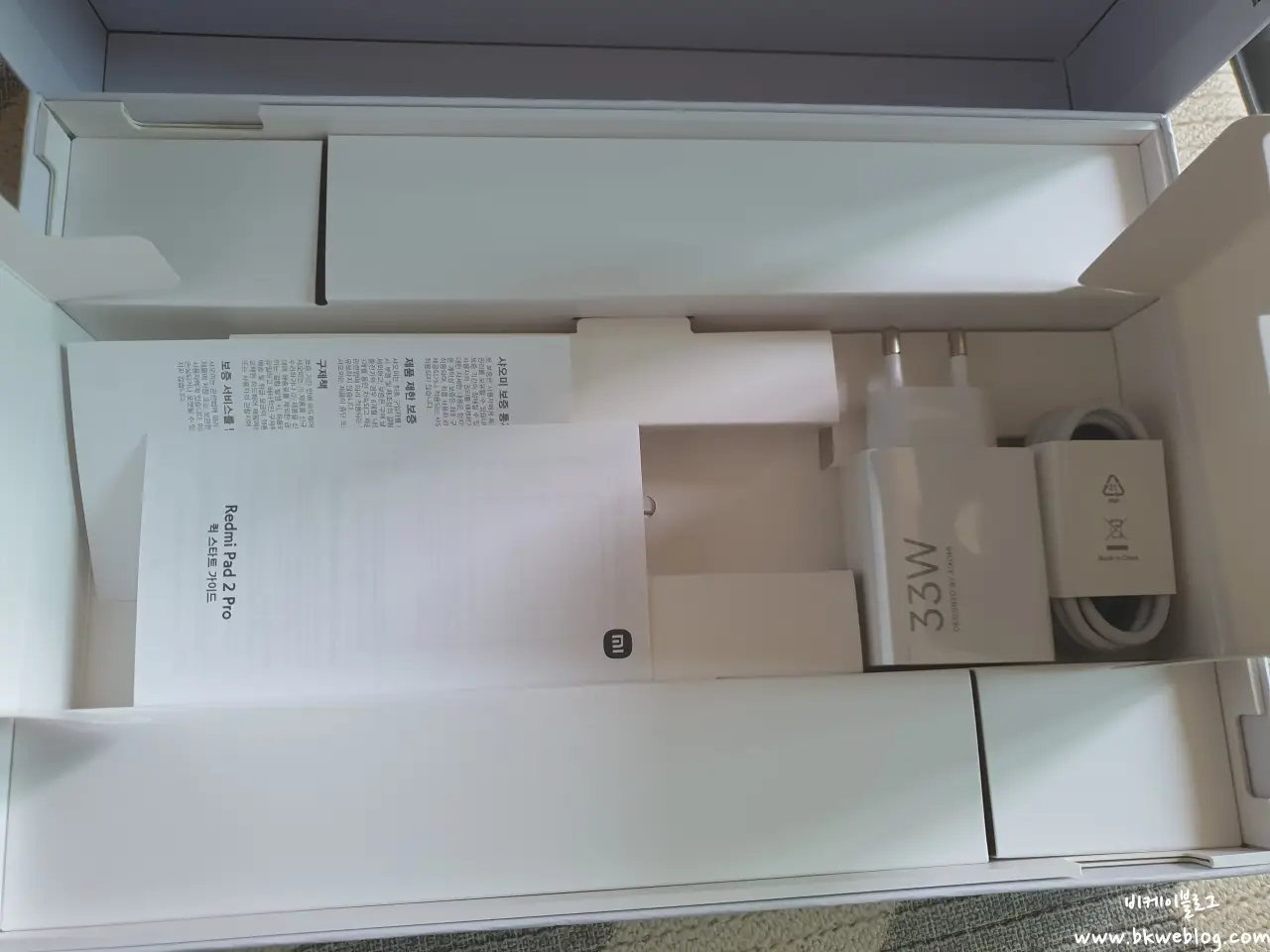
The Redmi Pad 2 Pro (6GB + 128GB) is priced at ₩349,800 (roughly $260 USD). I bought mine through Coupang (Korea’s Amazon equivalent) since it was slightly cheaper than Xiaomi’s official store, and added a 5-year extended warranty just in case.
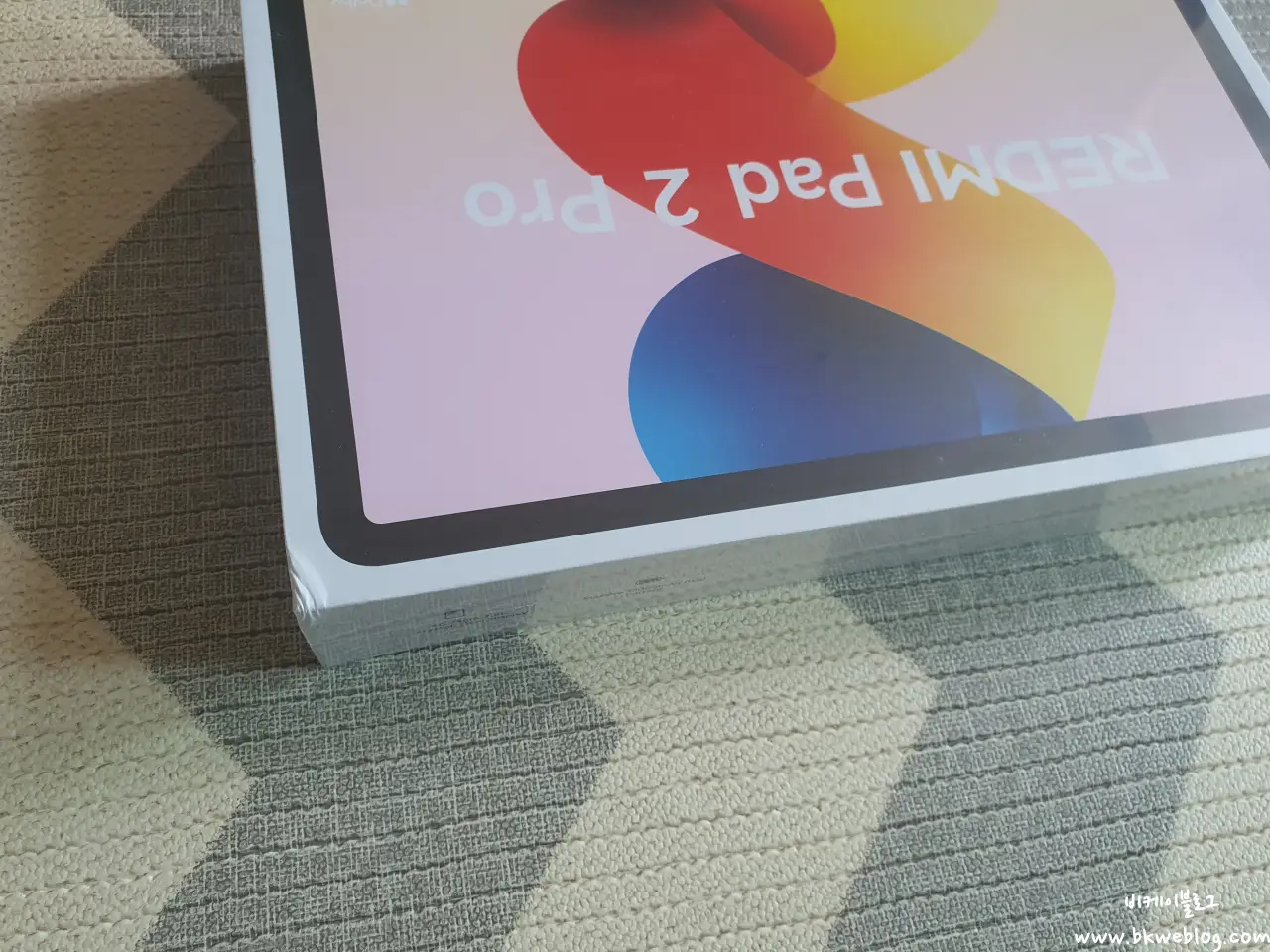
The tablet arrived wrapped in bubble wrap inside the box — which seemed fine at first, but one corner had taken a hit during shipping. Coupang’s packaging could definitely be improved for fragile electronics.
Inside the box:
- The tablet itself
- A 33W USB-C charger
- A USB-C cable
- A SIM ejector pin
I was expecting at least 45W charging support given the 12,000mAh battery, but it turns out 33W is the max. Not a dealbreaker, but worth noting.
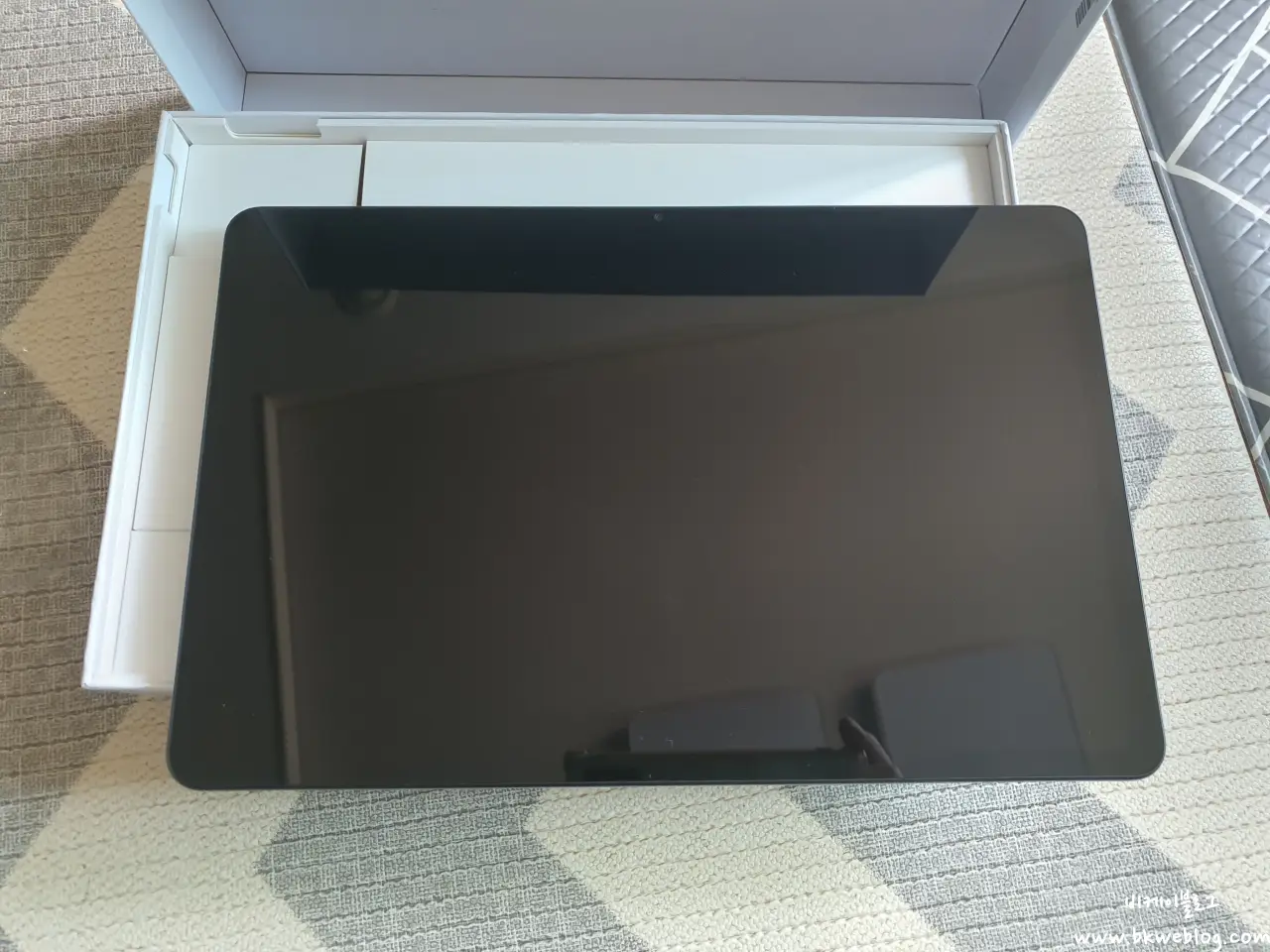
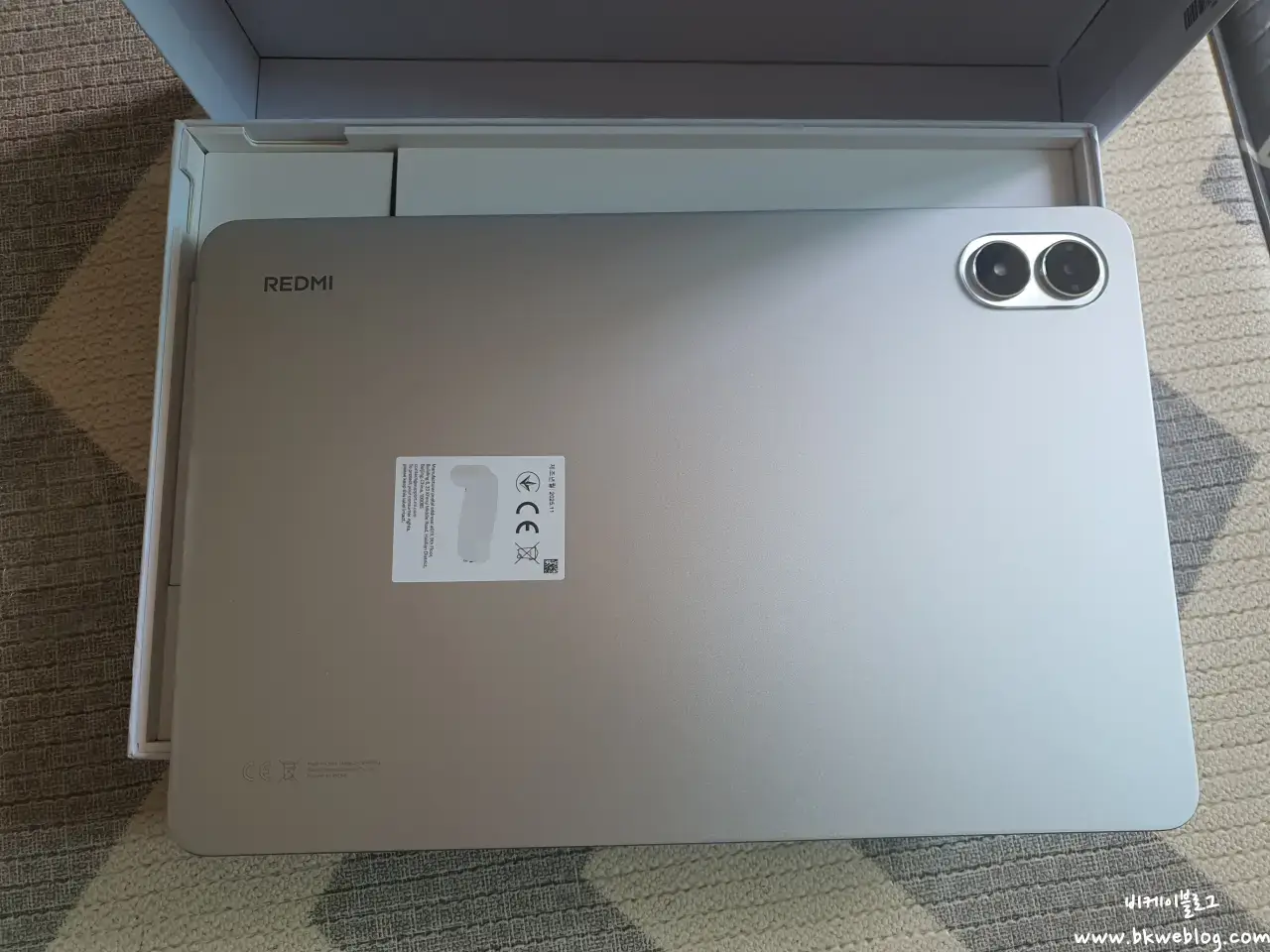
The rear camera module has a clean, understated design — a relief after years of increasingly bizarre camera bump trends on Chinese devices. The display is a standard glossy panel (no anti-reflective coating); a matte version is sold separately.
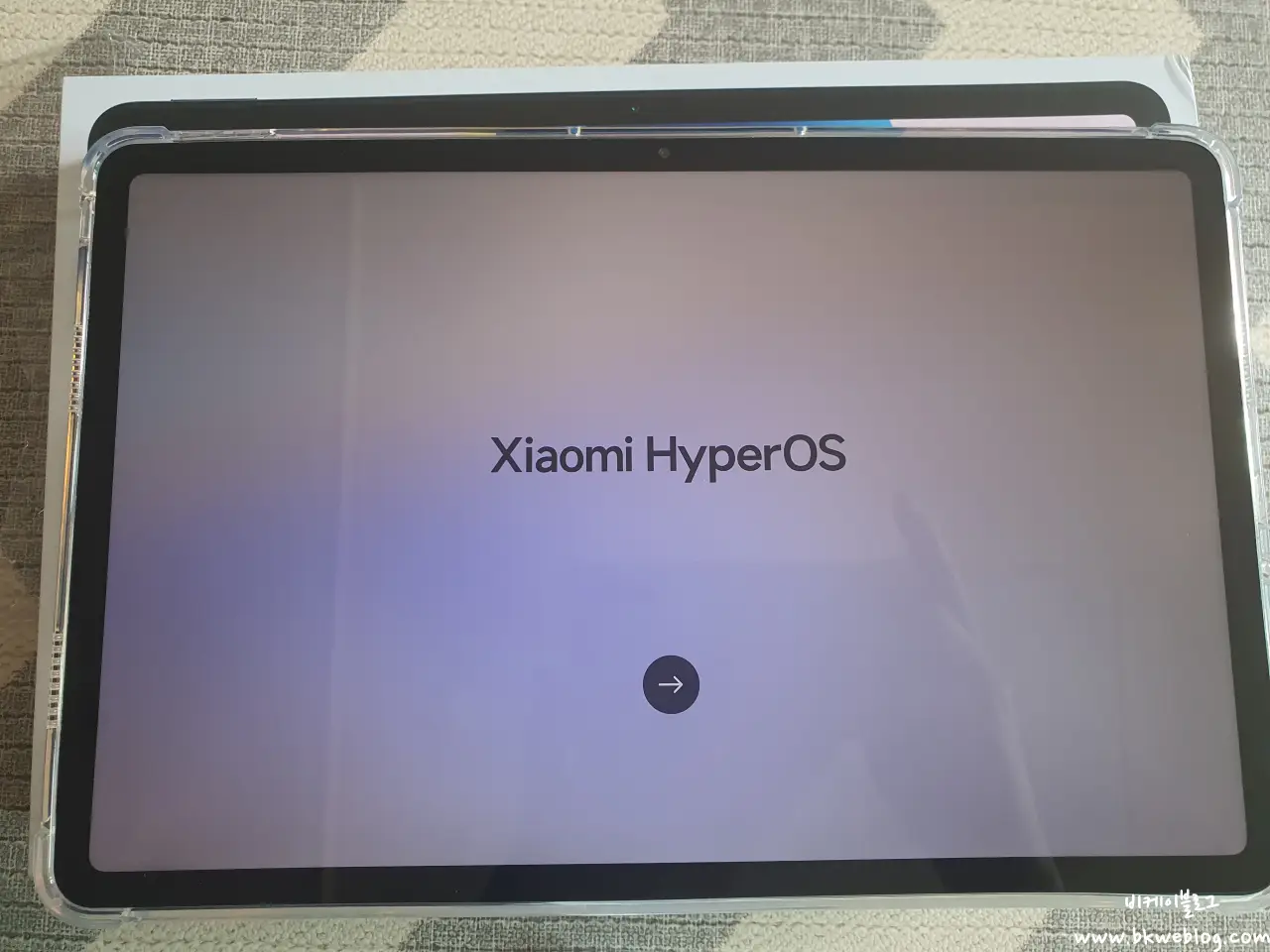
Powering it on for the first time, I was greeted by the HyperOS boot logo — my first time using this particular Xiaomi interface.
First Impressions: What’s Good and What’s Not
Display — excellent
The 12.1-inch LCD panel is genuinely impressive for the price. At up to 600 nits peak brightness and a 120Hz refresh rate, it’s smooth and bright without any noticeable shortcomings. Dolby Vision support is a nice bonus for streaming services.
Audio — decent, not great
With four speakers in a body this size, I expected more. The audio is fine — dialogue is clear and it gets loud enough — but nothing about it stands out, even with Dolby Atmos enabled. The fact that there’s still a 3.5mm headphone jack is a welcome touch.
Battery — excellent
The 12,000mAh battery lasts noticeably long. Yes, that contributes to the 600g+ weight, but since this isn’t a tablet I’ll be walking around with, I’d rather have the extra runtime. There’s also 27W reverse charging support for emergencies.
Performance (Snapdragon 7s Gen 4) — more than enough for daily use
The Snapdragon 7s Gen 4 is a mid-range chip — not flagship territory, and notably not the slightly faster Snapdragon 7 Gen 4. That said, coming from a Galaxy Tab A9 LTE with a Helio G99, the jump in everyday performance is very noticeable. For video streaming, web browsing, light productivity, and casual apps, it handles everything without breaking a sweat. Heavy gaming is probably not its strong suit.
Software updates — still waiting on HyperOS 3
The unit shipped with the November 2025 security patch and HyperOS 2 installed. HyperOS 3 was planned for rollout before the end of 2025 but hit some issues during staged deployment. For budget-tier Redmi devices, Xiaomi has delayed the rollout to around April 2026, with the next security patch bundled in.
One thing I appreciated: the pre-installed ROM is the global ROM, not a Chinese domestic build. That means clean update delivery through official channels going forward.
In-app ads — genuinely annoying
This is the one real pain point. Several of Xiaomi’s pre-installed apps display full-screen ads — including TikTok promotions and what appeared to be Chinese-language ads. Xiaomi’s built-in video app also surfaces short-form video feeds (think a built-in TikTok equivalent), which feels more like Xiaomi pushing its ecosystem than a useful feature. These can be ignored or disabled, but they shouldn’t be there in the first place.
Final Verdict
The Redmi Pad 2 Pro costs more than gray-market Chinese domestic tablets like the Xiaoxin Pad, but you’re getting proper after-sales support, a clean global ROM, and — critically — a 7-year update commitment that most competitors can’t match in this price range.
The audio is average and the in-app ads are irritating, but for watching OTT content, the display and battery are excellent. Performance is solid for everyday tasks, and I’m enjoying it enough that I’m already considering the official stylus and keyboard dock.
If you’re looking for a 12-inch Android tablet under $300 with long-term software support, the Redmi Pad 2 Pro deserves serious consideration.