After much deliberation, I finally pulled the trigger on the TCL 75Q6C — a 75-inch 4K Mini LED TV. I bought it through Coupang (South Korea’s major e-commerce platform) and added their 5-year extended warranty plan to offset worries about after-sales service. Choosing a Chinese brand over Samsung or LG wasn’t an easy decision, and I spent quite a bit of time second-guessing myself.
Why I Left Samsung and LG Behind
The final push came from a frustrating experience with an LG 55-inch TV. About three years in, the backlight died — no picture, just sound. I had it repaired, paid the bill, and told myself three years wasn’t that unusual. Then, less than three years after the repair, blotches started appearing in the upper portion of the screen. The backlight was going again. When I called for a quote, the service cost had jumped significantly compared to the first repair.
That experience cracked a long-held belief: that Samsung or LG appliances would comfortably last ten years. With that assumption gone, I started shopping by specs rather than brand loyalty.
What I Was Looking For
My must-haves were straightforward: 4K resolution, Dolby Vision, and Dolby Atmos. I don’t use cable or IPTV — my viewing is entirely streaming (Netflix, Disney+, and other OTT platforms) plus over-the-air terrestrial channels, so those three specs were non-negotiable.
When I checked Samsung and LG against those criteria, the results were disappointing. Samsung doesn’t support Dolby Vision at all. LG only enables it at the OLED tier, which comes at a steep price — especially at 75 inches, where costs climb quickly.
That led me to look at the third-tier Chinese brands with meaningful global market share: Hisense and TCL. Hisense was appealing on price, but it’s only available as a grey-market import in Korea, which ruled it out. I also looked at iFFALCON (a TCL sub-brand), but the price gap between iFFALCON and TCL proper wasn’t significant enough to justify going with the lesser-known name. The 75Q6C it was.
What I Found Out Before Buying
I did my research first, using AI to dig through overseas community discussions since Korean-language reviews were either thin or clearly sponsored. Here’s the honest picture that emerged:
Value for money is excellent. Internationally, TCL consistently wins praise for delivering strong specs at prices well below Samsung and LG equivalents. That reputation held up.
Durability is a mixed bag. Some users reported failures within two to three years; others noted five-plus years of trouble-free use. The prevailing sentiment seemed to be: if you get five years out of it at this price point, it’s a win. Compared to the established Korean brands, there’s a perception gap on long-term reliability.
Upscaling lags behind. Native 4K content looks excellent, but upscaling lower-resolution material (FHD and below) is noticeably weaker than what Samsung and LG processors deliver. Worth knowing if you watch a lot of older content.
Software updates are sparse. Samsung and LG now advertise five to seven years of OS updates. TCL makes no such promise, and the overseas community consensus was that one or two updates over the product’s lifespan would be considered good. Post-sale software support is clearly not a priority.
Over-the-air UHD is Korea-specific. In South Korea, reception of UHD terrestrial broadcasts is restricted to certified domestic TVs — a patent/licensing issue that also affects grey-market Samsung and LG units. This isn’t relevant outside Korea.
Going in with eyes open, I decided five years was my target, signed up for the extended warranty, and placed the order.
TCL 75Q6C: Specs Summary
- 75-inch Mini LED panel
- Dolby Vision IQ, HDR10+, IMAX Enhanced
- 512-zone local dimming, 1,000 nits peak brightness, 144Hz refresh rate
- Dolby Atmos, DTS-HD audio
- TÜV Rheinland Eye Comfort certified
- Android TV (shipped with Android 12, updated to Android 14)
Real-World Experience
Setup: Next-day delivery and installation, which was impressive given my location outside a major city. The installers were efficient, though they didn’t offer the same product-specific guidance you’d get from a Samsung or LG technician.
Size: 75 inches is genuinely large. I needed a few days to adjust. Sitting too close isn’t comfortable — you’ll want to plan your viewing distance carefully.
Brightness and viewing angle: This is where the Mini LED panel earns its keep. I can now watch during the middle of the day with the curtains fully open — something I couldn’t do with the old TV. Viewing angles are wide enough that the picture holds up from almost anywhere in the room.
Dolby Vision and Atmos content: When streaming Dolby Vision content on Netflix or Disney+, the indicator appears in the upper left and the difference is real — deeper blacks, more vivid highlights, noticeably better shadow detail. The Atmos audio is loud and dynamic, though I’ll admit the built-in speakers feel slightly behind the picture quality. A soundbar is on my short list.
IMAX Enhanced: Works as advertised. Watching Tron: Ares (filmed in IMAX), the image expands to fill the full panel in the IMAX sequences and returns to standard framing outside them — exactly as intended.
Non-HDR content: Even outside Dolby Vision, the black levels are impressive for a non-OLED display. Dark scenes with explosions or contrast-heavy action look dramatically better than what I was used to.
Terrestrial channels (Korea-specific note): UHD reception isn’t available on this set, but the FHD signal upscaled to 75 inches looks better than I expected going in. It’s not a weak point in practice.
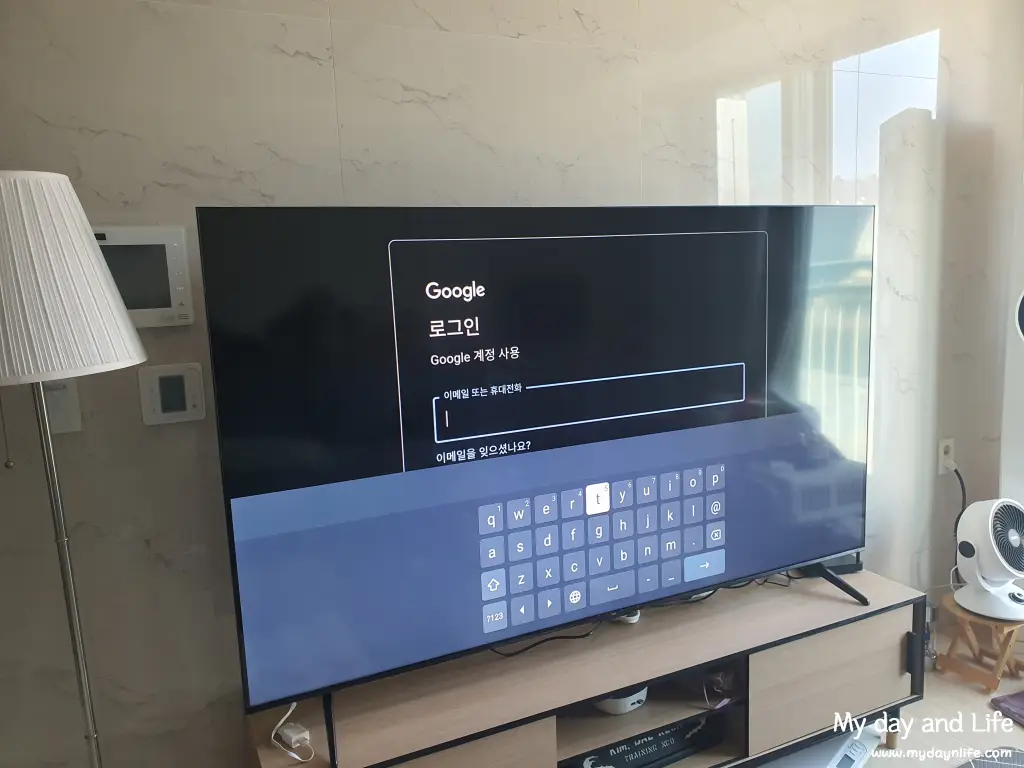
Android TV responsiveness: The remote response is snappy — no noticeable lag. I had worried about this, but it wasn’t an issue. The OS shipped at Android 12 with a June 2025 security patch; it has since updated to Android 14 with a December 2025 patch. TCL has indicated Android 14 was already in preparation, and security patches should continue through roughly 2027.
Final Verdict
For just over 1,000,000 KRW (~$720 USD), a 75-inch 4K Mini LED TV with this picture quality is genuinely hard to argue with. I’ve been watching significantly more OTT content since it arrived — the immersion is on another level compared to my previous setup.
My main hope now is that the hardware holds up to match the experience. If I get five solid years out of it, this purchase will have been an excellent decision. I’ll post an update if anything notable changes.