After selling my wife’s Chevrolet Aveo, we bought a 2016 Mercedes-Benz A200 (W176). We kept it for three years but drove only about 10,000 km (around 6,200 miles), and sold it in autumn 2019. There was nothing wrong with the car; toward the end we were starting it maybe once a month, so we sold it to a Mercedes-Benz certified used car dealer.
Here is what I learned after 10,000 km. These are personal impressions, and the car was a Korean-market spec A200, which matters for some of the equipment points below.
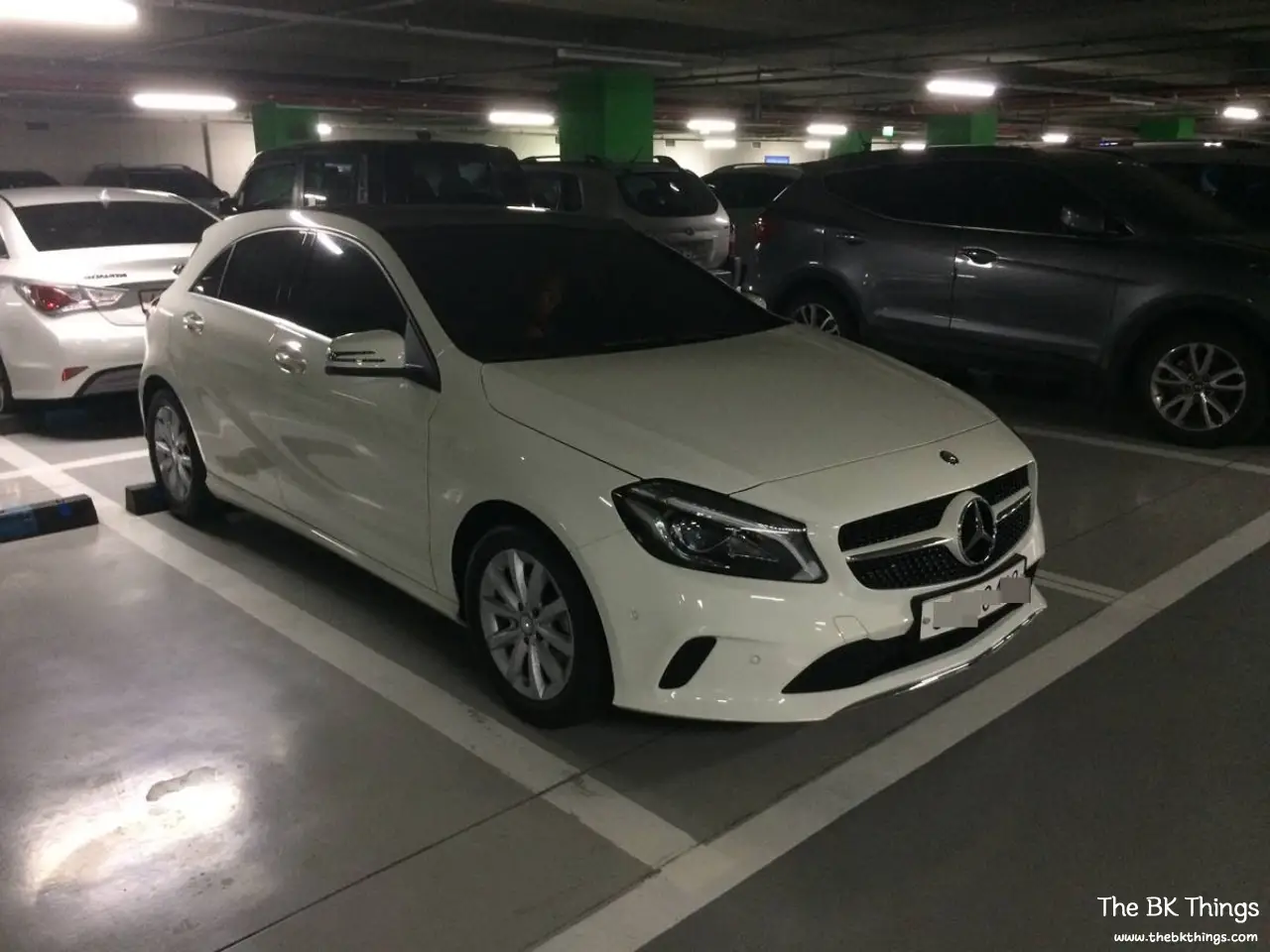
Design and Interior
I really liked the exterior design. Interior space is similar to a compact car like the Hyundai Elantra. With a 2,700 mm wheelbase, space was decent apart from the low roof.
Headroom up front felt tight because the already low roof also housed a sunroof. Reclining the seat would help, but I sit fairly close to the wheel, so the cramped feeling never went away.
The column-mounted gear selector felt odd at first but became very convenient. The side effect: when I drove other cars, I kept turning on the wipers by mistake.
Visibility is not great because of the low roof and slim design. The slim mirrors leave sizable blind spots. The driver’s mirror has an anti-glare coating that works well during the day, but at night it made cars driving without headlights almost invisible. The 2016 A200 sold in Korea had no blind-spot monitoring, which would have helped a lot.
Some Mercedes “philosophy” took getting used to: the rear parking sensor display is only visible if you turn your head; heated seats step down in temperature and switch off after 30 minutes; and recirculation switches back to fresh air after a while. Some of this became convenient, some stayed annoying.
Our car had no automatic climate control, the HVAC controls sat very low and were hard to use while driving, and the non-touch screen was frustrating.
Driving Feel
For its size, it is remarkably stable. It felt so planted that I caught myself driving about 20 km/h faster than usual. Despite its sporty looks, it doesn’t feel light, partly because the steering is on the heavier side.
The standard run-flat tires read the road clearly but grip very well. When I switched to winter tires, that planted feeling dropped noticeably while ride comfort improved, which shows how much the tires shape this car.
The brakes are strong and confidence-inspiring, though the wheels get dirty from brake dust very quickly. Overall the driving experience was very satisfying.
One quirk: the front sensor used for automatic emergency braking below 60 km/h gets covered by snow. On snowy days, I had to clean it after about an hour of driving.
Ride Comfort
The biggest surprise was the rear seat. Even though the backrest is fairly upright, the rear ride was comfortable, with a solid, well-damped feel from the multi-link rear suspension.
The front was firmer. On highways with many bridges, expansion joints sent noticeable jolts into the cabin. With winter tires, the ride became much softer, which I personally preferred, at the cost of some stability.
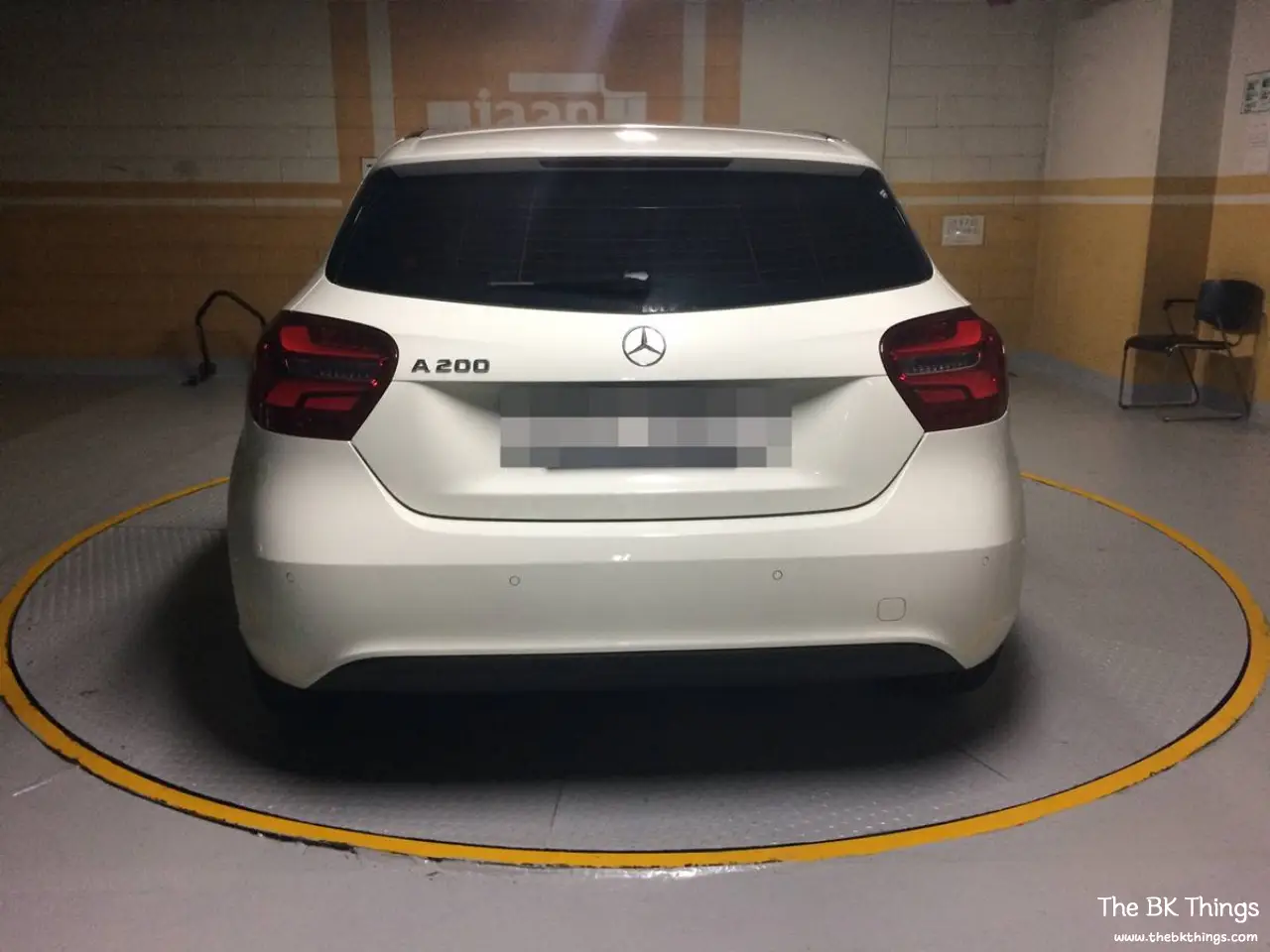
Engine, Transmission and Fuel Economy
The A200 uses a 1.6L single-turbo engine with a 7-speed dual-clutch transmission (7G-DCT).
The dealer said regular gasoline was fine. I disagree. After only 10,000 km, booming noise and vibration had increased on regular fuel. After two or three tanks of premium, even a less sensitive driver would notice the difference. If you own one long-term, I recommend premium fuel. There is some turbo lag, but once past it, acceleration is satisfying.
The 7G-DCT was stressful in stop-and-go traffic. Low-speed jerkiness and the sensation of being pulled back are typical of a dual-clutch, but they made driving in Seoul unpleasant. On open roads, it was excellent, shifting instantly with no hesitation.
At 100 km/h the engine turns about 1,800 rpm, and highway fuel economy was very good. Above a certain speed, I consistently averaged at least 16 km/L (about 6.25 L/100 km or 38 mpg US). On long trips with a full tank, the fuel gauge barely moved.
Disappointing Korean-Market Equipment
In 2016, Mercedes-Benz Korea sold the A200 in a single trim, combining options for the Korean market even though many more configurations existed overseas. I would have happily traded the headroom-stealing sunroof for automatic climate control, mirror-mounted turn signal repeaters, rear air vents and blind-spot monitoring. The passenger seat used a manual recline dial, too. I understand cutting options to keep the price down, but these choices weren’t driver-friendly.
Other Notes
- Hidden rear camera: the camera pops out only when reversing, so the lens stays clean in rain and snow. Surprisingly useful.
- Wiper noise: the wipers kept scraping the glass, likely due to excessive arm pressure. I mentioned it at every oil change, and it was never fixed.
- Dealer-installed dashcam: in Korea, Mercedes-Benz only allowed its own “Starview” dashcam at the time (installing another could void related warranty coverage). It recorded only while driving, with no parking mode, and its quality was poor. Not being able to check scratches or dings while parked was a real annoyance.
- No navigation: our car had no built-in navigation, which led me to activate Apple CarPlay and Android Auto myself (see the related post below).
Verdict
If you live somewhere without heavy traffic, the A200 can be a very satisfying car. It is stable at speed, the body feels solid, and highway fuel economy is good. If you plan to keep one long-term, use premium fuel.
At the time of writing (2021), I felt newer A-Class models had fallen behind Hyundai and Kia on safety equipment for the price. Low-speed automatic braking was rare as standard in 2016, but newer cars now detect pedestrians and cyclists, and adding all of that would push the A200’s price up considerably. Despite the great driving feel, I would hesitate to buy one again for that reason.
- Pros: great stability, solid body, comfortable rear ride, strong brakes, good highway fuel economy, hidden rear camera
- Cons: jerky 7G-DCT in traffic, low roof and tight headroom with sunroof, blind spots, no touch screen or auto climate (Korean spec), wiper noise
- Tip: use premium fuel; consider winter tires for a softer ride
More Car Posts
- How to Activate Apple CarPlay and Android Auto on a Mercedes A-Class W176 (NTG5S1)
- Chevrolet Orlando LPG Solenoid Valve Replacement: Check Engine Light Fix
- Chevrolet Aveo / Sonic 1.6 Sedan Long-Term Review